Sometimes I’m in the mood for straightforward bass-guitar-drums and voice rock and roll. Other times, though, I reach for more elaborate, intricately arranged and lushly detailed pop. Elephants into Swans, the new record by The Sun Sawed in 1/2 — their first in thirteen years — fits squarely into the latter category. Its one of the best, most exuberant releases in quite some time.
The Sun Sawed in 1/2 is (very) often compared to Jellyfish, and for good reason. Its sound is equal parts brash, quirky, serious, not serious, psychedelic, fun, and purposefully over-the-top. Elephants into Swans is all of that. It’s also smart, melodic and filled with hooks that increasingly grab your attention upon repeated listening. And, for good measure, it picks up steam as it proceeds, making it the rare record that does front-load its virtues.
It all kicks into high gear by the third track, “Brittle Star,” a sunny up-beat tune about a mercurial girl made of “lightning, passion and rope.” “Countess I Fear Something’s Wrong,” probably my favorite track in the set, is about stolen opportunity –“they cut your song out/with pinking shears and rusted years/they gauged and gauzed it/I press to make repeat then I scan and pause it” — that concludes with a nice Beach Boys flourish for no real reason other than it just sounds great. There’s never anything wrong with that:
Indeed, “sounding great” is the partly the reason for Elephants into Swans to be. “She Offers Her Heart” adds horns to the chorus to up the exuberance factor: “She offers me her heart/and now I’m in love and now I’m in love/and now I’m in love and now I’m in love.” You can’t get any more enthusiastic than that.
Horns also help give “This Girl’s My Lullaby” a swinging, 60’s adult pop feel that veers into decidedly Bacharach territory:
The record closes with more horns on the unrelentingly upbeat and optimistic “Waltzing In Clover.” What else can be made out of these words: “I’ll marry the whole of you/Ten ways amazed for the rest of my days/I’ll marry the whole of you/I’ll drink your gaze sunlit sparkly glazed/I’ll marry the whole of you/You you you you you you’re my love”:
By the end of it, with the words “waltzing in clover” sung over themselves in a dizzying carousel of joy, you can’t help but think: “all you need is love,” in the words of one of The Sun Sawed In 1/2’s other major influences. Indeed, that could very well be the point made by the entire record.
Elephants into Swans can be downloaded for $9 on Bandcamp, a cheap price for such gleeful happiness.
The soundtrack of my summer of 1984 was comprised largely of two double-records that helped stretch the boundaries of “punk rock” and combined cost less than $5,000 to record. They were Double Nickels On The Dime by The Minutemen, and Zen Arcade by Hüsker Dü.
All told, these two five-star records packed nearly 70 songs into 143 minutes of sonic wonderment, ranging from punk to funk to jazz to psychedelia to noise to folk to something approaching pop. The two records were relentless and occasionally “in your face.” They were sometimes indulgent. They were sometimes silly. They were “all over the place” in the best way. And they were always brilliant; two of the best of the entire decade.
Less than a year later, HüskerDü dropped an even better record onto the world — and arguably their best — New Day Rising, clocking in at a mere 40 minutes and change. New Day Rising was direct and focused where Zen Arcade was purposefully sprawling and meandering. Combined with numerous instantly hummable melodies, New Day Rising upped the ante even higher on the band’s overall approach to sonically assaulting the ears and the mind.
The best song on the collection is the third track, “I Apologize,” perhaps the single most ferocious piece of Power Pop ever committed to wax. Hüsker Dü, of course, was not the first band to combine a sharp pop melody with the power of punk rock. The Ramones and The Buzzcocks, in particular, did this with great results in the mid and late-70s. The Buzzcocks‘ “Ever Fallen In Love” is a great example of pure pop masquerading as punk rock.
“I Apologize,” however, combined punk and pop even louder and even faster than anything either The Ramones or The Buzzcocks. It did it by matching buzz saw guitars and pounding percussion and bass with a perfect hook and a classic pop plea of frustration and self-righteousness: “I apologize/I apologize/I apologize/Said I’m sorry (Said I’m sorry)/Now it’s your turn/Can you look me in the eyes and apologize?” go the key lyrics. “I Apologize” is as raw, as powerful and as likely to bounce around in your mind for hours or days as it was when it was released nearly thirty years ago:
I’ve written previously about Big Star, here and at the bottom of this. As I noted previously, the band probably influenced everything else discussed on this site. They rank as an all-time favorite.
A fellow music blogger, Loosehandlebars, recently posted a great piece on three covers of Rolling Stones songs. One of those covers was “Jumpin’ Jack Flash” that Alex Chilton recorded in 1970, two years before Big Star released its debut, #1 Record. Loosehandlbars captures quite nicely what is so great about Chilton’s cover of one of the Stones’ most enduring and popular tracks:
This is the Big Star sound he was looking for. A combination of drive & melody which evokes the best of 60s British rock but has its own thing going on. The fluidity of Chilton’s guitar work is a thing of beauty & this cover, like the best of the band’s work, makes you go ‘Oh Boy! This is how it is done’. Every rock music writer ever has said their piece about Big Star. All I want to add is that halfway through their classic songs you go, Whoa ! if only all music was this good. My favourite Stones cover I think.
Mine too. Loosehandlebars later responded to my comment on his piece by noting “this cover has, for me, a touch of ‘Back Of A Car’ about it. No higher praise.” Here is Chilton’s wonderful version of “Jumpin’ Jack Flash”:
For good measure, here’s Big Star’s “Back Of A Car” from the band’s second record, Radio City:
While you are at it, go check out Loosehandlebars’ almost daily writings on music, often from a personal perspective. They are insightful, and always interesting. They can be found here, or in the “blogroll” to the right. Fans of melodic rock might will found his piece on the Go-Betweens, another all-time favorite, particularly interesting.
It’s The End Of The World As We Know It And I Feel Live may be the ultimate “do it yourself” recording. Simmons is a member of Sparkle*Jets U.K., a Southern California band, whose sound is described as “a distinctive marriage of ’60s and ’70s rock and whimsical guitar pop.” That’s close enough. It certainly sounds something like that.
It’s The End Of The World is a collection of covers — some acoustic, some not– that Simmons performed “live” entirely by himself. How does one person play “live,’ particularly on the several multi-part tracks that comprise the collection? Here’s what Simmons says:
My tracks are usually still ‘live’ with all the normal mistakes you’d expect, but I play all the instruments. It’s what it would be like if I could clone myself and got together to jam on songs I don’t really know. Most of these songs were first attempts of songs I don’t know how to play.
* * * * *
Recording was typically done on multi-track equipment, but each take was done ‘live’ in one go, with a camera running. Some songs (mostly the 2nd half of the album) were recorded live with a webcam or iPhone, which is why they don’t sound as good.
Okay, I know what you’re saying. This guy recorded a bunch of songs that he doesn’t really know how to play. He admits that his record contains a number of “mistakes.” He acknowledges that some of the songs sound crappy. Why on earth should you spend your time listening to this “recording”?
Well, you should. Its darned good, and chock full of excellent interpretations of classic pop rock gems.
The first track, Squeeze’s “(This Could Be) The Last Time,” sets the tone for the entire loosely constructed and playful set. Simmons starts with a riff from the original that sounds like the opening riff from “Is That Love,” also by Squeeze, before getting down to business in the song at hand. “Spooky,” done originally by Classics IV and then by The Atlanta Rhythm Section, breezes along quite jazzily before Simmons outdoes himself by singing all of the parts of the Brothers Gibb, and harmonizing with himself to great effect, on “How Can You Mend A Broken Heart?” Simmons’ self-harmonies by virtual cloning are also quite tasty on his superb version of ELO’s “Bluebird Is Dead”:
Two tracks later, Simmons gives “She Said, She Said” a slightly heavier, bassier treatment than The Beatles’ original version. It works quite well:
The acoustic iPhone recordings kick in soon thereafter. “The Most Beautiful Girl In The World,” made famous by Charlie Rich back in 1973, gets a dramatic, stripped down and soulful reading by Simmons devoid of the schmaltz of the original hit. Perhaps even better, however, is Simmons’ version of the Elvis Costello/Burt Bacharach-penned “Toledo.” Simmons notes at the outset that “I don’t have a flugelhorn,” thus requiring him to hum a couple of the brass parts amid his gorgeous vocals:
It all comes to a close four songs later with 25 seconds worth of The Beatles’ “Hello Goodbye,” a perfect ending to a set that does not even come close to taking itself too seriously. It’s just “good, clean fun,” and Simmons’ obvious love of the songs he covers is readily apparent. What more can you want in the middle of winter?
You can “name your price” for a digital download of It’s The End Of The World on Bandcamp. Simmons also has posted videos for each of the tracks on You Tube. Check ’em out.
I went to a whole lot of Bar Mitzvahs back in 1977. There was one band that played at almost every one. It was composed of four or five guys who worked as dentists during the week. They played these weekend parties in three-piece suits — or, sometimes, open vests over puffy shirts — that went quite nicely with their well-trimmed beards. This was, of course, 1977.
For some reason, the song that got everyone on the dance floor, at every party, was “Evil Woman” by ELO. I never pegged the song as a “dance” tune coming, as it did, in the middle of the disco age. Maybe it was the jazzy, scratchy guitars, or the slightly funky keyboards that got everyone moving. The whole scene still seems kind of mysterious even after all these years. A truly “live” (meaning not “lip-synched”) version of “Evil Woman,” culled from The Midnight Special television program, best captures its essence and Jeff Lynne’s not-so-well-trimmed hair:
Fast-forward a couple of decades.
Brian Kassan, who played bass and guitar in the Wondermints before they backed Brian Wilson, founded a band called Chewy Marble in 1995. The All Music Guide described its 1998 self-titled debut as:
a sparkling power-pop effort spotlighting founder Brian Kassan’s versatile songwriting skills, which touch on influences ranging from Badfinger (‘Loneliest Man’) to the Zombies (‘Peculiar’) to even contemporary chamber-pop revivalists like the High Llamas (‘Teacher’s Pet’).
When you listen to the band’s follow-up effort, 2001’s Bowl Of Surreal, you can add “mid-70s Bar Mitzvah dance music” to their range of influences. “Reasons Why,” the tenth track on the longplayer, makes me think back to those days of dancing to “Evil Woman” on Saturday afternoons and Saturday evenings. The song is all about swing-y keyboards, lounge-y lead vocals, scratchy guitars, dreamy background vocals and string instrument sounds. You know, kind of like ELO, even if Lynne often sang with more conviction that your basic lounge singer:
A couple of years ago, Kassandiscussed on Power Popaholic his early early days in the Wondermints playing a “small dive bar” called The Irish Mist:
we were playing tons of fun covers that most bar bands wouldn’t attempt or even know for that matter…’Magic’ ‘Go All The Way’ ‘Love is Like Oxygen’ ‘Telephone Line’ and many others!
“Telephone Line” was, of course, recorded by ELO and released in May 1977 — the peak of the Bar Mitzvah season that year. The Wondermints’ version of the song, if you can find it, is awesome. And so is “Reasons Why.” I feel “all 70s” whenever it comes on, which Kassan obviously intended.
In its broadest sense, Power Pop is well-suited to the radio. The songs are short. They’re concise. They’re usually uncluttered. They favor harmony, melody and hooks over everything else. They eschew guitar noodling, drum solos and banshee-like singing. They don’t take themselves too seriously. Their goal is to bash around in your brain for hours and days on end.
Power Pop once was played on the radio, particularly in the early days of the “New Wave” of the late-70s and early-80s. The Knack, The Romantics, Cheap Trick and The Cars had several big hits back in the day.
In early-1981, the late Phil Seymour had his only American Top 40 hit with a brilliant two-minute, fifty-one second pop confection called “Precious To Me.” Its a fairly typical tale of love, hurt and longing. You know, a theme that has been done a gazillion times in pop music. But that, of course, is part of its charm. The other part of its charm is its wonderful, endlessly singable “call-and response” chorus, amid head-swaying drums and rhythm guitar:
That your precious to me (I love you so)
And I can’t let you go (Can’t let you go)
Baby one day you will see (Girl can’t you see)
That you’ll always be (You’ll always be)
So precious to me
The folks in the Southern California band Nushu — Lisa Mychols and Hilary Burton (more on Mychols in a piece to come) — had the extremely good sense and taste to cover “Precious To Me” in 2011, and contribute their version of the song to the 14th installment of the International Pop Overthrow series.
Nushu actually improves on Seymour’s original, which is quite an achievement, by widening the sound and adding a smooth, even-more-sunny-sunshine sheen to the proceedings. Their version will keep you popping and bopping as you drive around town with the top down. You should go get it, but you can listen to it right here:
This site is not necessarily about the “latest” music. Its about the past seven decades of a certain type of music. It proceeds from the viewpoint that “if I haven’t heard it, its new to me.” And, of course, “if you haven’t heard it, its new to you, too.”
So, what follows is some music I really liked in 2012. It’s in no particular order. Some of it was released in 2012. Some of it was released more than forty years ago. Some of the older music I knew previously — even liked quite a lot in the past — but which nevertheless resonated more over the past twelve months than it did in years gone by:
Cotton Mather, Kontiki (Deluxe Edition): Back in 1998 when Kontiki was originally released, music discovery was not quite what it is now. On-line resources were limited and were accessed largely by dial-up modem. My music discovery in the old days consisted of reading about something new and different, or driving to the Virgin Megastore to use its many CD listening stations.
I first heard Kontiki in its entirety after it was re-released earlier this year, along with twelve bonus tracks, following a successful Kickstarter campaign. The results are glorious, and Kontiki brings to mind The Beatles’ Revolver with straight-ahead pop songs blending seamlessly with more reflective psychedelic pieces punctuated by wood and string instruments, piano and analog tape tricks.
Starbelly, Lemonfresh(Deluxe Edition): This is another reissue of a 1998 release that I heard for the first time in the past year. Actually, this is a digital-only reissue by Futureman Records of an earlier reissue that added twelve bonus tracks to the stew. Its one one of those records that makes you think on its first listen “damn, this is good.” Its more than seventy minutes of non-stop hooks, melodies, chiming jangly guitars, occasional big beats and consistently clean production. There is not a bum track in the entire twenty-three song collection, although the eleven that comprised the original 1998 release remain the standouts.
Michael Carpenter, SOOP Sampler: Carpenter has released five records of “songs of other people” (“SOOP”) over the years. A twenty-one track digital download sampler from Futureman Records (for a whopping $7) is a good place to start exploring this substantial and consistently great body of work. The highlights on this collection include Carpenter’s versions of The Hollies’ “Look Through Any Window,” “(What’s So Funny About) Peace, Love and Understanding” and “Wild Honey,” which bests the Beach Boys’ original. My favorite, though, is Carpenter’s version of The Zombies’ brilliant and beautiful, “This Will Be Our Year”:
The Supahip, Seize The World: Carpenter recorded this one-off back in 2006 with Mark Moldre. “They set about the idea of writing, recording and mixing a track… arriving in the morning with nothing except maybe some loose snippets of songs, and leaving with a completed track.” And it worked. Seize The World delivers twelve uncluttered, melodic pop songs (you even get “mono” versions of ten of the tracks) that go down easy and will stay in your brain for days, particular the quiet, reflective “No Tomorrow”:
Seth Swikrsy, Watercolor Day: This 2010 release was on my car stereo almost daily for a couple of months this year. Its just addictive. As I wrote previously, the Beatles are an obvious influence on Swirsky’s solo work, yet Watercolor Day feels much more like the Beach Boys’ Pet Sounds. Trumpets, french horns, violas, cellos, oboes and trombones appear seemingly out of nowhere, but nevertheless fit perfectly in the mix and saturate the sound with texture.
Cliff Hillis, Dream Good: Hillis wrote, sang and played on Starbelly’s Lemonfresh. His fourth solo outing is my favorite record that was actually released for the first time in 2012. Its a textbook example of perfect pure pop, covering all the necessary territory from mid-tempo pieces with acoustic guitars to full-fledged rockers to grand, more baroque pop, all of which is beautifully sung and played.
Myracle Brah, “Simplified”: Three-chord rock? Think one-chord rock on this one from 2001. That’s why it works. It just pounds its way relentlessly into your brain for a minute, fifty-four seconds and then refuses to leave. Its as simple and as powerful as it gets.
Doug Powell, “When She Awoke”: Powell wrote and performed this one from 1998 on cassette 8 track with Tom Petersson of Cheap Trick. Despite using a recording process that Powell calls “the audio equivalent of drawing in the sand with a stick,” the song nevertheless occupies the opposite end of the pop spectrum from “Simplified.” It’s lush, elaborate and dreamy, and filled to the brim (actually, far beyond the brim) with gorgeous harmonies.
The Jayhawks, Mockingbird Time: “Waiting For The Sun” from 1992’s Hollywood Town Hall ranks in my all-time Top 40. The Jayhawks, though, were never quite the same after Mark Olson left the band in 1996 to follow his inner-Gram Parsons. His return on Mockingbird Time, released in September 2011, marked a return to form for the band. All of the trademark Jayhawks elements are present — the sharp songwriting, the full sound and, most importantly, the beautiful harmonizing of Olson and Gary Louris.
Big Star, “The Ballad Of El Goodo”: I’ve written about Big Star on this site, and I have liked “The Ballad Of El Goodo” for years. But this year, I really came to love this song about hope and perseverance against “unbelievable odds.” It features one of Alex Chilton’s finest vocal performances, great backing harmonies and is one of the band’s best songs. It also directly or indirectly influenced everything else on this list.
So, that’s a capsule of the music that made me the happiest over the past twelve months. How about you?
I really like The AllMusic Guide. Its pretty comprehensive. Its usually accurate. The reviews are often informative. I find myself consulting the site frequently to get more information about something, or someone, I’ve heard for the first time.
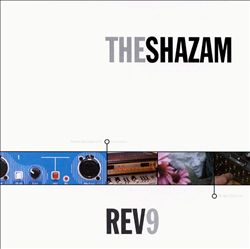
Here is one, however, they got wrong — massively, ridiculously wrong: 2 and 1/2 stars (out of 5) for Rev9 by The Shazam from 2000.
O.K., I know. Rev9 is just an EP. It clocks in at less than twenty-eight minutes. Six of those minutes are consumed by the title track which is, shall we say, a creative “re-imagination” of perhaps the single worst song in the entire Beatles catalog (“Revolution 9”). Rev9 is far from perfect.
But before we delve into what is actually quite good about Rev9, check out some of the works of great artistic merit that also received 2 and 1/2 stars from the AllMusic Guide:
Jessica Simpson, In This Skin: “[I]ts heart is in the mature middle of the road but its sound is still pitched too young, making this a record that satisfies neither audience.”
Kiss, Kiss Symphony: Alive IV: “The full orchestra shows up, in Kiss makeup of course, for the whole of the second disc. It sounds more bloated than bombastic as the mix ping-pongs between crunchy guitars and disco-style string and horn flourishes.”
Rod Stewart, It Had To Be You: The Great American Songbook: “[T]he whole project has an artificial undercurrent that’s hard to shake, especially since the song selection, the arrangements, and the performances play it so safe they’re largely undistinguished.”
“Unsatisfying,” “bloated,” “bombastic,” “artificial undercurrent,” “undistinguished” — is that what Rev9 is? AllMusic isn’t exactly fond of its experimentation: “[D]o we really want to hear experimental collages and progressive rock from one of America’s leading power pop bands?”
Well, Rev9 starts off with “On The Airwaves.” Sure, it has some weird noises and affected radio sounds, but it was nevertheless sufficiently rocking to be “The Coolest Song In The World” for a week on Little Steven’s Underground Garage:
“Wood And Silver” is also about radio, or to be more precise, an old trusted transistor from days gone by: “It ain’t worth nothin’ but it works just fine/After all this time, you’d think I would have thrown it away.” As AllMusic notes, “Wood And Silver” certainly has a trippy feel to it and is washed occasionally in mellotron. Sometimes, though, you just have to say “more mellotron.” “Wood And Silver” still flashes some pretty tasty, chiming guitar and a catchy chorus. You know, like in Power Pop.
The next track, “Okay,” sounds like something off of Big Star’s Radio City. I guess that would be some more Power Pop.
“Periscope” is a mid-tempo rocker punctuated with banjo.
“Month Of Moons” would have felt at home on one of David Bowie’s early-70s long-players.
“Take Me,” the second-to-last song, is a dreamy, simply gorgeous track with mandolins, strings, mellotron and nearly perfect vocals. It alone is worth the price of admission.
I like The Shazam’s rocking, head bopping exercises in pure Power Pop — think “New Thing Baby” from 2002’s Tomorrow The World — as much as anyone else. But Rev9, replete with “experimental collages,” beats the living daylights out of the “unsatisfying,” “bloated,” “bombastic,” “artificial” and “undistinguished” product of Jessica Simpson, Kiss and Rod Stewart. Its not a 5 star record. 4 would be good.
As I noted the other day, I recently contributed a piece on the expanded version of the second re-release of Starbelly’s 1998 Lemonfresh to a relatively new site call The Cultural Purveyor. I guess my job there is to spread the word about resurrected, lost Powerpop classics since I wrote previously on that site about the re-released and expanded version of Cotton Mather’s 1994 masterpiece, Kontiki.
I digress, although Starbelly has become a mainstay on my morning and afternoon commutes to and from work. That brings me to the track that first drew my attention to the band. That would be the original version of “Mother Of Pearl,” the re-recording of which appeared on the band’s second long-player, 2002’s Everyday And Then Some.
On its own, the “official album” version of “Mother Of Pearl” stands out as a stellar track, one of the best on Everyday. The real brilliance, though, is in the original version song, recorded with the band’s initial three-piece line-up. Its occasionally muffled vocals set against a strong, melodic chorus, ringing guitars, and typically beautiful harmonies will lodge the track firmly in your subconscious for days. If that’s not enough, the subtle hip-hop rhythm and long fade-out with mysterious whispers gives the whole thing an American gothic feel, an effect that is enhanced further by the song’s official video:
The original version of “Mother Of Pearl” is available on Not Lame’s Six Years of Powerpop, which can still be purchased digitally or streamed on services such as Rhapsody. Its easily in my Top 40 of all-time.
Powerpop compilations are a good bargain. You get a lot of songs, by a lot of different artists. They’re inexpensive. You get an “instant playlist” created by someone else. You also get to sample tracks you may have overlooked or never knew even existed.
The International Pop Overthrow CDs — coniciding witht the annual multi-city Powerpop festivals of the same name — are well-known in this regard. Not Lame Recordings released several spectacular Powerpop complilations before closing its doors in 2010. SymPophony #1 and its Six Years Of Powerpop are particularly noteworthy. The company’s former owner, Bruce Brodeen, continues to release compliations through his new venture, Pop Geek Heaven.
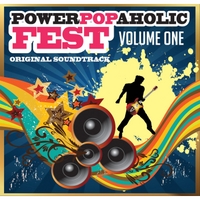
The “Original Soundtrack” to the Powerpaholic Fest held this past September in Port Jefferson, New York, is a newcomer to the field, and its also a good one. The collection is put out by the folks behind the Powerpopaholic blog, which has been listed on the blogroll on the right-side of this page for the past year.
The really good stuff in this set comes early.
Lannie Flowers kicks off the set. “Give Me A Chance,” from his 2008 release Same Old Story, itself appears on at least two Powerpop compilations that I have, and for good reason. Its a jangle pop classic that will stew around in your mind for days and days. “Come On Girl,” on this collection, is in the same vein with its perfect melodic hooks and jangly guitars right out of 1965. Here it is:
Cliff Hillis, who sang and played on Starbelly’s classic 1998 release Lemonfresh — about which I wrote recently on another site — contributes “Taking Tree” from his recent release, Dream Good. The song conjures XTC and late-60s Kinks, and throws in short, bouncy beats to keep you bopping.
“Every Now And Then” by The Honeymoon Stallions sound like a lost track from John Lennon’s Double Fantasy. “Bawl And Change” by King Washington harkens to the early-70s days of Badfinger and Big Star. Eytan Mirsky’s “Another Week Or Two” is pure pop goodness that flies by in its 3 minutes, 41 seconds.
Is everything on the “Original Soundtrack” as good as those five songs? Of course not. But the collection runs the gamut of the broad genre of Powerpop, from simple songs with loud, fast bright and shiny guitars to introspective pieces with more complex arrangements.
In a perfect world, the set would give you 18 big fat hits by 18 original artists, just like the old K-Tel collections from the 1970s. The Powerpopahlic folks even made their own “K-Tel style commercial” to commemorate the release:
Go check out the Powerpopaholic “Original Soundtrack.” Complete tracks can be sampled, and the entire collection purchased in any format you desire, on Bandcamp. And, for good measure, all profits go to Sandy relief efforts.
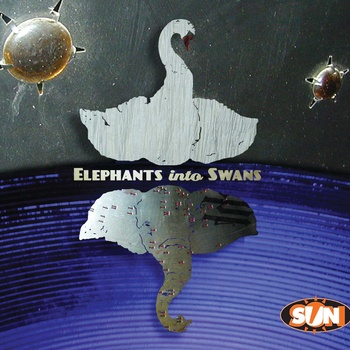 Sometimes I’m in the mood for straightforward bass-guitar-drums and voice rock and roll. Other times, though, I reach for more elaborate, intricately arranged and lushly detailed pop. Elephants into Swans, the new record by The Sun Sawed in 1/2 — their first in thirteen years — fits squarely into the latter category. Its one of the best, most exuberant releases in quite some time.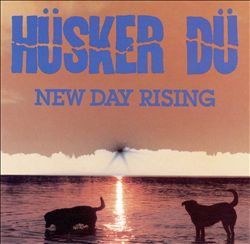





 Pop That Goes Crunch!