I’ve come into possession lately of a lot of old-school Power Pop from the late-70s and early-80s. Most of it would have been called “new wave” or “punk rock” at the time, although some of it pre-dates the invention or popular use of those two terms. All of it, though, featured bright guitars, driving beats, close harmonies and a rejection of the slurry mass of goo that most commercial “rock and roll” had become in the 1970s. “New Wave” was a misnomer. This stuff was retro. It sounded like 1965, but often on speed.
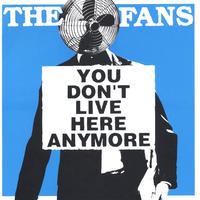
One such frenetic retro rocking Power Pop outfit was The Fans. The were formed in Bristol, England in 1978, and released a couple of singles on the wonderfully titled “Fried Egg” label before disbanding after a couple of years.
Try not to move, bop your head, tap your feet, etc. while listening to “You Don’t Live Here Anymore.” Its as simple as it gets — “I don’t want you ’round here anymore/I don’t want you knocking on my door/I don’t want you ’round here in the morning/’round here in the evening/around here any time at all” — and propelled by a pounding beat, crystal clear vocals and no adornment whatsoever.
All of that, of course, makes it brilliant, and far better sounding thirty-five years later than its much more popular “album oriented rock” contemporaries:
Unlike a lot of old school Power Pop, the Fans’ short-lived output is not lost forever to history. A 17-track of odds and ends, including “You Don’t Live Here Anymore,” is available from CD Baby for $16.97. It’s worth checking out.
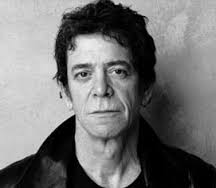
The intrepid curators of the PowerPop blog unearthed and posted a wonderful piece of formerly lost pop music history — a 20 year-old “Lewis” Reed making like Dion a couple of years before the Beatles first landed in the United States. You can check out “Lewis” bouncing his way through the minute-fifty nine “Your Love” right here. It’s a nice surprise.
I bring this up because the tributes to Reed following his passing focused generally on the same things. AP’s tribute to the “iconic punk poet” is fairly typical:
His trademarks were a monotone of surprising emotional range and power; slashing, grinding guitar; and lyrics that were complex, yet conversational, designed to make you feel as if Reed were seated next to you. Known for his cold stare and gaunt features, he was a cynic and a seeker who seemed to embody downtown Manhattan culture of the 1960s and ’70s and was as essential a New York artist as Martin Scorsese or Woody Allen. Reed’s New York was a jaded city of drag queens, drug addicts and violence, but it was also as wondrous as any Allen comedy, with so many of Reed’s songs explorations of right and wrong and quests for transcendence.
Although I have no real quarrel with that, it forgets that Reed could also pen the perfect melody. The 20-year-old “Lewis” heard on “Your Love” persisted through Reed’s later excursions into “slashing” and “grinding” guitars to write some of the best and most enduring pop music of the past fifty years.
One of the best examples of Reed’s pop instincts in action is “Stephanie Says,” which was recorded in 1968 but did not officially see the light of day until 1985. Its lilting strings and celesta (a keyboard instrument with metal plates struck by hammers to produce bell-like tones) give it a baroque feel. The power of the lyrics derive from the way the words sound together instead of whatever they might mean:
Stephanie says that she wants to know/Why she’s given half her life/to people she hates now
Stephanie says when answering the phone/What country shall I say is calling from across the world
Here it is, complete with lyrics:
The celesta also “propels” another one of Reed’s pure pop masterpieces, the lush and daydreamy “Sunday Morning,” the track that kicks off The Velvet Underground With Nico. Its words are also memorable, and stick in your mind, based on how they sound strung together so simply and precisely:
Watch out, the world’s behind you/There’s always someone around you who will call/It’s nothing at all
Here it is:
I first discovered Reed and The Velvet Underground in the 80s when my I was rocking to The Clash and other kindred spirits. “I’m Waiting for the Man” and “Heroin” were, and remain, great songs about “the downtown Manhattan culture of the 60s.” But I always preferred “Stephanie Says” and “Sunday Morning,” as well as songs like “Sweet Jane,” “Pale Blue Eyes” and “What Goes On.”
Anyone can make “slashing” and “grinding” guitar sounds. It takes a pop genius to write, as Reed did in “Stephanie Says,”: “But she’s not afraid to die, the people all call her Alaska /Between worlds so the people ask her/’cause it’s all in her mind/It’s all in her mind.”
The Effection released its sole long-player, Soundtrack To A Moment, in 2003. Although they hailed from the region in which I live, I can’t say that I paid any attention to them. Neither did too many people, apparently, and Soundtrack To A Moment went out-of-print.
In the digital age, however, what’s old can become new again, and that great resuscitator of given-up-for-dead Power Pop, Futureman Records, recently made Soundtrack To A Moment available for digital download for the ridiculously low price of $7. Go get this one right now, and bask in the glow of its punk rock/new wave Power Pop ripped from the glory days of 1979.
This is apparent from the first line of the opening track, “The Sound Effection,” where the words “this is the sound effection” announces the driving guitar rock that follows, just like The Jam opened its second long-player with the call to arms of “this is the modern world”:
The title track covers similar sonic ground in the mold of The Jam, but spins it with a decidedly American take on the proceedings in a song about “nothing to do around here”:
But Soundtrack To A Moment is not all loud and thrashing punk rock. Its best track, “Somewhere Souvenir,” takes the mid-tempo approach and adds breezy guitars and gorgeous 60s-styled vocal harmonies:
The band even slows it down completely on “Agony,” while throwing in some slightly jangling guitars to go with those great harmonies that fill the entire album:
To say that Soundtrack To A Moment is a “find” out of nowhere is an understatement. Like the best bands of the early days of punk rock and new wave, The Effection move seamlessly from full-fledged high energy rockers to more “sophisticated” and contemplative stuff. It takes you back in time, moves to 2003 and yet sounds entirely fresh a decade later. My only regret is not getting hip to this sooner.
My profile on a now-defunct site said that one of my earliest memories of music involved sitting in the backseat of my parents’ avocado green late-60s Chevy Malibu listening endlessly to 93KHJ while stuck in traffic in Los Angeles. The Chevy Malibu, with its black top and black vinyl seats, looked like this:
KHJ ruled the roost in Los Angeles for many years. Its Boss Radio format was copied all over the country:
On May 3, 1965, KHJ was the site chosen for the birth of the new format designed by Bill Drake and Gene Chenault. Ron Jacobs was selected as the first Program Director. BOSS RADIO utilized a tight rotation, top drawer talent, and the elimination of almost all non-essential talk. The Johnny Mann Singers’ jingles didn’t hurt either. Within months, the format spread from coast to coast, and Boss Radio was the king in most markets.
The blogsite 93 KHJ/Boss Radio collects an abundant amount of old Boss Radio material, including images of the station’s weekly Top 30 “Records In Southern California.” These weekly Top 30 lists were available for years “wherever records are sold.” Back then, that included department stores. I remember picking them up at the May Company on Pico Boulevard.
The top songs were, of course, played several times a day. Spending a lot of time in the car, or listening to KHJ at home with the flu, would sear those songs forever into your memory.
It wasn’t just repetition that glued those songs to your mind. It was also the nature of the two-and-a-half minute pop song of the-late 60s and early-70s. They were hooks and melody, hooks and melody, hooks and melody. They were intended to stay in your mind for hours, days and weeks.
Here is the Top 30 from February 22, 1967, as it appears on the Boss Radio site.
“Happy Together” by TheTurtles was No. 1.
“Ruby Tuesday” by The Rolling Stones was No. 3.
“There’s A Kind Of Hush/No Milk Today” by Herman’s Hermits was No. 7 (although “No Milk Today” is the vastly superior track).
“I Had Too Much To Dream (Last Night)” by The Electric Prunes was No. 10.
“Gimme Some Lovin'” by The Spencer Davis Group was No. 17.
“(We Ain’t Got) Nothin’ Yet” by The Blues Magoos was No. 23.
The greatest double-sided single of all-time, “Penny Lane/Strawberry Fields Forever,” debuted on the chart that week at No. 13.
The following week saw the debut on the chart of “Live” by The Merry-Go-Round, one of the greatest pieces of Southern California “sunshine pop” ever put to wax.
Just reading that list, and looking at other late-60s, early-70s lists on the Boss Radio site, will cause an endless number of songs to run through your mind for a very long time.
This all changed by the mid-70s. Melodic rock on the AM dial was replaced by Bloat Rock (Boston, Kansas, Supertramp), Cock Rock (Foreigner) and Plain Old Boring Rock (Bad Company). Kiss and Queen are certifiable geniuses in comparison. Punk and New Wave were cultural imperatives. They just had to happen.
Fast-forward to today. A company called Zikera has created a wonderful application for iOS and Windows 8 devices called “Groove.” Among other things, it sans your devices to create “Groovy Mixes” of songs that work well together based, in part, on data supplied by Last.fm users. It has become my most used “app” since it automatically creates an endless array of playlists.
I was driving to work the other day and a particular “Groovy Mix” played three consecutive songs that, combined, perfectly capture the essence of the melodic rock that comprised the Boss Radio of the late-60s and early-70s.
The aptly named “Pop Sound” by The Masticators came up first. The Masticators were a late-90s Los Angelers-based Power Pop band made up, in part, by Lisa Mychols, about whom I wrote recently. Futureman Records has issued a 33-track compendium of the band’s entire recorded output. Its worth checking out in its entirety for some of the tightest, most head-bopping-est Power Pop around. “Pop Sound” is just that — a joyous, three-chord celebration of rhythm and melody anchored by Mychols’ confident, sexy vocals and a driving, basic beat:
Next up was “Pete Ham” by Crash Into June, a tribute to the late Badfinger singer/songwriter/guitarist. It begins with this bit of resonance: “What’s that song it sounds like heaven/I heard it once when I was seven/You could say it reminds me of summer days/Summer days.” True that, true that. It continues shortly later: “It’s got the 60’s British feeling/Hooks that keep me on the ceiling/I hear it now, its got that pure infectious sound/It keeps my head all spinning around/Spinning around.”
“Pete Ham” is three-and-a-half minutes of pure jangle pop perfection:
The final song in my commuting trilogy was “She Dreams,” from Michael Carpenter’s 1999 debut Baby. “She Dreams” is perfect, joyful “sunshine pop” that gives “Live” a run for its money:
So, there you have it. The old AM rock radio groove hasn’t disappeared in these days of overly processed, mechanical dance pop. You just have to know where to find it. When you do, you will be transported to another place
The soundtrack of my summer of 1984 was comprised largely of two double-records that helped stretch the boundaries of “punk rock” and combined cost less than $5,000 to record. They were Double Nickels On The Dime by The Minutemen, and Zen Arcade by Hüsker Dü.
All told, these two five-star records packed nearly 70 songs into 143 minutes of sonic wonderment, ranging from punk to funk to jazz to psychedelia to noise to folk to something approaching pop. The two records were relentless and occasionally “in your face.” They were sometimes indulgent. They were sometimes silly. They were “all over the place” in the best way. And they were always brilliant; two of the best of the entire decade.
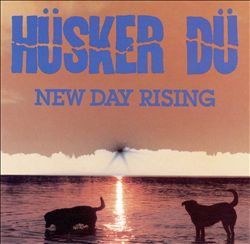
Less than a year later, HüskerDü dropped an even better record onto the world — and arguably their best — New Day Rising, clocking in at a mere 40 minutes and change. New Day Rising was direct and focused where Zen Arcade was purposefully sprawling and meandering. Combined with numerous instantly hummable melodies, New Day Rising upped the ante even higher on the band’s overall approach to sonically assaulting the ears and the mind.
The best song on the collection is the third track, “I Apologize,” perhaps the single most ferocious piece of Power Pop ever committed to wax. Hüsker Dü, of course, was not the first band to combine a sharp pop melody with the power of punk rock. The Ramones and The Buzzcocks, in particular, did this with great results in the mid and late-70s. The Buzzcocks‘ “Ever Fallen In Love” is a great example of pure pop masquerading as punk rock.
“I Apologize,” however, combined punk and pop even louder and even faster than anything either The Ramones or The Buzzcocks. It did it by matching buzz saw guitars and pounding percussion and bass with a perfect hook and a classic pop plea of frustration and self-righteousness: “I apologize/I apologize/I apologize/Said I’m sorry (Said I’m sorry)/Now it’s your turn/Can you look me in the eyes and apologize?” go the key lyrics. “I Apologize” is as raw, as powerful and as likely to bounce around in your mind for hours or days as it was when it was released nearly thirty years ago:
Sammy Hagar lives in my local community. He is treated heroically in the local press. He’s an entrepreneur, a performer and a philanthropist extraordinaire. He’s supposedly an overall great guy.
That’s pretty odd. To me, Sammy was always associated with particularly bad singing, even worse taste and a very conservative kind of psuedo-rebellion. You probably knew that late-70s/early-80s scene pretty well: guys walking around in long-sleeve concert t-shirts and girls with feathered roach clips in their hair. Cool, dude.
Theolonious Monster was (and still is) an LA-based band that did a kind of Replacements thing in the 80s. They mixed jangly guitars, punk rock, folk rock with drunken sloppiness, punctuating it all with humor.
A “two-fer” CD collection of their second and third albums (Stormy Weather and Next Saturday Afternoon) is consistently great. “Michael Jordan” is a slacker anthem about sitting home all day doing nothing other than watching reruns of The Odd Couple, and then tuning into to watch Michael Jordan score 47 points. “Lena Horne Still Sings Stormy Weather” is about holding onto all of of the good things in life during times of change.
Their greatest song, though, is “Sammy Hagar Weekend.” It captured perfectly a particular type of “Southern California concert t-shirt scene.” There were, of course, versions of that scene everywhere back in the day. The best lines — and you certainly knew some of these people — remain brilliantly on-point:
We got a Metallica t-shirt/We got a little tiny baby mustache/We got a jacked up Camaro/We’re sitting in the parking lot at Anaheim Stadium/Drinking beer, smoking pot, snorting coke/And then drive, drive over 55/Yeah/Cause it’s a Sammy Hagar weekend/It’s a big man’s day
Here is it, in all of its glory:
So, go check out the two-CD set of the band’s second and third long-players — a great and swirling mix of genres, humor and melody. And stick a finger in Sammy’s eye while you’re at it.
The passage of time can give clarity on whether a particular song, or a particular album, that in “real time” influenced your taste in music years or even decades later. For me, that song is “I Will Dare” by The Replacements, the lead track on the classic 1984 release they rather audaciously titled Let It Be.
Before they released Let It Be, The Replacements mostly produced sloppy, loud, fast rag tag stuff. That all changed in the first few minutes of Let It Be, when “I Will Dare” came chiming out of the speakers with its shuffling beat, its mandolin and its twelve-string guitar. The band took the British Invasion and The Byrds, stuck them both in the middle of the punk scene of the mid-80’s, and pointed the way to the future. Its leader, Paul Westerberg, also proved arguably to be the best songwriter of the decade, penning perfect lines like this one that punctuated “I Will Dare”: “How young are you?/How old am I?/Let’s count the rings/Around my eyes.”
But it was the chorus that made “I Will Dare” unforgettable, with its almost tongue-twisting rhythm: “Meet me anyplace or anywhere or anytime/Now, I don’t care/Meet me tonight/If you will dare, I will dare”:
Let It Be ultimately stood between two worlds for The Replacements. Westerberg sensitively tackled confused sexual identity in “Sixteen Blue” and “Androgynous” alongside old-school punk silliness for which the band was known previously in “Tommy Gets His Tonsils Out” and “Gary’s Got A Boner.”
But “I Will Dare” is the standout of the set. Its Big Star-influenced power pop would define the band’s next long-player, Tim, and make it one of the single best records of the 1980s. “I Will Dare” is where punk rock grew up and realized it could write and play beautifully. Almost everything I listen to today, and which is discussed in these pages, reaches back to that time in 1984 when I first heard “I Will Dare.”
The last post on this blog displayed a decided preference for the easy, the breezy and the casual in rock music over the making of Big Statements. Rock musicians just ain’t philosophers.
That got me thinking about the most simple, catchy two-chord pop punk issued over the last year. And it was put out by a guy — along with his family — with a natural penchant for navel-gazing and the issuance of important proclamations about life.
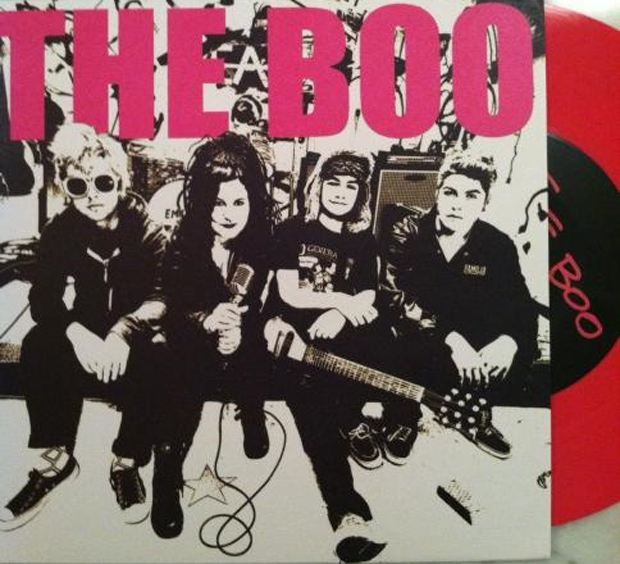
That would be “I Want Revenge” by The Boo, a side-project of the occasionally self-important Billie Joe Armstrong. While Green Day certainly has put out a lot of catchy two minute pieces of pop punk goodness, it occasionally shows bloat rock tendencies. However, the band’s earlier side project, The Foxboro Hot Tubs, put out a terrific — and quite fun — record a couple of years ago steeped in the British Invasion and Garage Rock. It made no Big Statements.
The Boo, though, is even more simple, consisting of Armstrong, his wife and their two sons. It sounds positively 1979. Its fast. Its kind of repetitive. Its kind of obnoxious. It conveys a single theme over three buzz-saw minutes — “you broke my heart, I’m gonna get you back.” It thus has all of the elements to have been featured prominently on Rodney on the Roq way back in the day. Here it is:
Heck, the packaging even looks like a 45 sold at Rhino Records back in 1979:
Channeling 1979
You can call “I Want Revenge” nostalgia. You can call it backward-looking. Or you can just call it fun. It makes no Big Statements. It doesn’t even try. And that’s a really good thing.
The MC5 were known for their loud, brash punk rock a decade before punk rock supposedly existed. Their debut album, “Kick Out The Jams” (1969), was recorded live and presented a sonic onslaught of guitars, bass, drums, uncompromising revolutionary politics, sex and drugs. All par for the course in 1969.
Their rallying cry, “Kick out the jams, motherf*ckers” caused the album to be banned by a number of different retailers, propelling it naturally to the Top 30. It even hit Number 45 on the R&B chart.
“Kick Out The Jams” was, in no way, a melodic pop album:
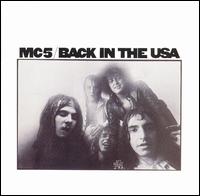
Things changed a year later. Jon Landau, who later worked with Bruce Springsteen, produced “Back In The USA” and imparted a clean, compact sound that was radically different than what it succeeded. And did it ever succeed.
Its best song, “Shakin’ Street,” managed to be power pop before power pop supposedly existed. It managed to be new wave before new wave existed. Its strummed and chiming guitars will cause you to shake and to move. The song itself sounds like it was moving to wherever “Shakin’ Street” is located.
And, its got great characters. Besides Little Orphan Annie and “Sweet Sue too,” there is Streetlight Sammy coming “all the way from New Jersey on his girlfriend’s tips.” He came to meet “skinny leg Pete.” And then there is Sally Baker who “wants to shake her shaker.” They all came to a world-wide party on “Shakin’ street, where all the kids meet”:
“Shakin’ Street” is another song that was years ahead of its time. As I wrote previously, that is a testament both to its influence on everything that came after, and to its overall greatness.
Back in 1977, I had a very old school seventh grade music teacher. She played the piano and taught us to sing songs like “Erie Canal.” It went like this: “I’ve got a mule her name is Sal/Fifteen miles on the Erie Canal/She’s a good ol’ worker and a good ol’ pal/Fifteen miles on the Erie Canal.” Real cutting edge and contemporary stuff, written back in 1905.
One day, she came to class and said sternly: “I read an article in the newspaper yesterday about this very bad music that is coming over from England. Its called punk rock. There is a group called the Sex Pistols. The music is loud, and they curse and vomit. Do not listen to it.”
I immediately thought to myself, “Wow, this punk rock stuff must be pretty bad. Or maybe pretty good. I gotta check it out.”
I went home and, of course, read the article:
What she had said about the article was mostly true. The group was called the Sex Pistols. They cursed and they vomited. However, this “punk rock” was said to have come originally from America, not from England as she claimed. America would never have generated such stuff. She obviously never heard of the Stooges, the MC5, the New York Dolls, etc.
I was not yet 13 in January 1977. I couldn’t buy something called “Anarchy in the U.K.” The radio wasn’t playing this stuff. And, what would have happened if I came home with something with the words “Sex Pistols” written on it? This came, and went. 1977 was a dark time for music you could actually hear on the radio. The Number One song in the United States at the time was “You Make Me Feel Like Dancing,” by Leo Sayer.
But, a couple of years later, I read about the domestic release of a supposedly “bombastic” record by The Clash. By this time, though, I had a decent bike and some cash. I was able to up to ride up to Westwood one day after school to buy the domestic version of “The Clash,” which I later called “The Green Album”:
I hadn’t even heard a single song on this record before buying it. But, not only was it supposed to be “bombastic,” it also was the dreaded “punk rock,” the scourge of old school music teachers leading their students in rollicking renditions of “Erie Canal.” And, it had lyrics like this: “All over people changing their votes/Along with their overcoats/If Adolf Hitler flew in today/They’d send a limosuine anyway.”
It was great. I listened to it over and over again. Things would never quite be the same.
So, here’s to you, Mrs. Pace — a little “Anarchy In The U.K.”:






 Pop That Goes Crunch!